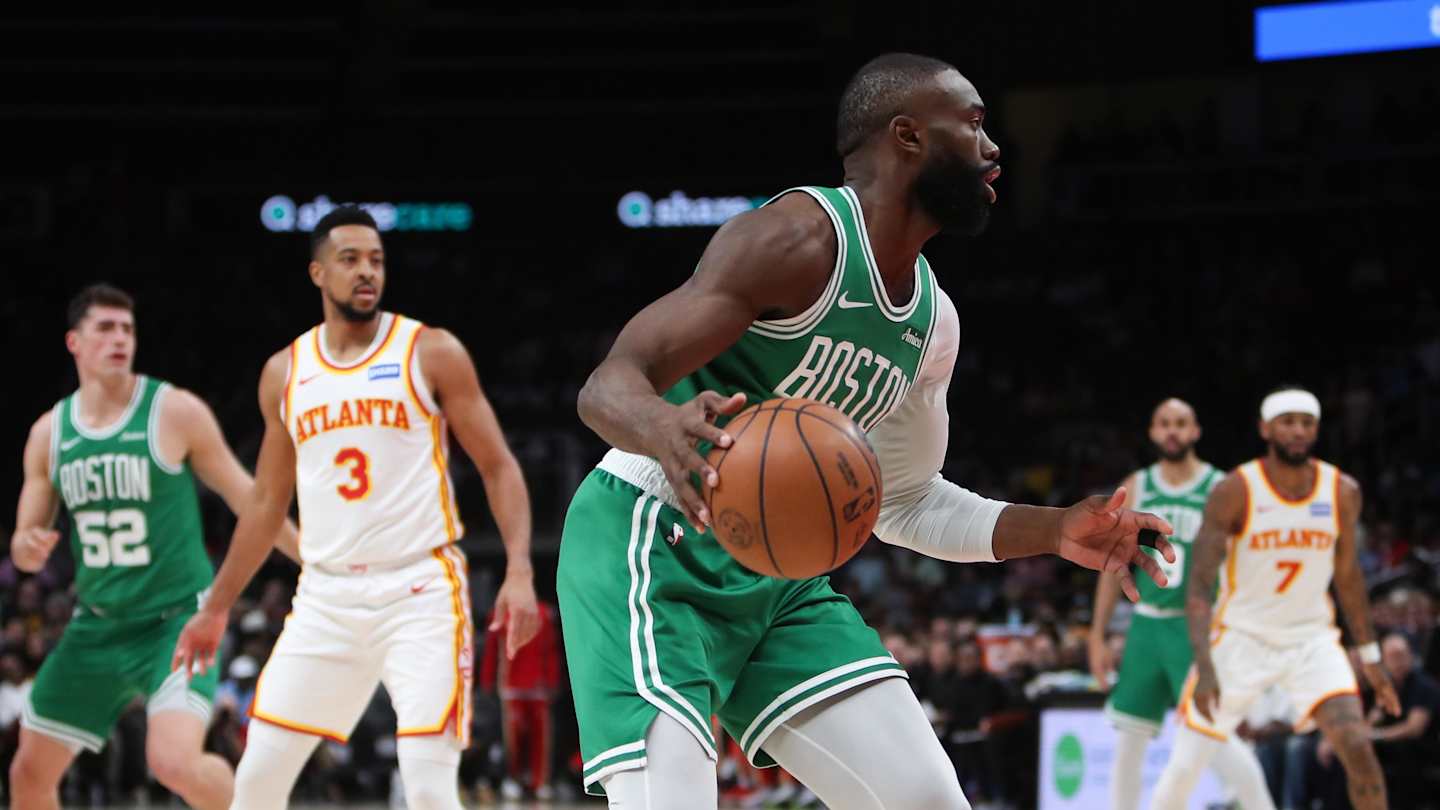
The NBA Playoffs ignite with a compelling first-round matchup featuring two teams with contrasting paths to contention. Following a hard-fought victory over the Miami Heat in the Play-In tournament, the Atlanta Hawks secured the seventh seed, setting up a highly anticipated clash against the formidable second-seed Boston Celtics. The Hawks rightfully earned their spot, defying eight-point underdog odds against a Heat team many expected to activate a new gear for the postseason. However, past hypotheticals aside, the focus now shifts to how these two Eastern Conference rivals stack up and what the Boston Celtics must do to ensure a successful and potentially swift progression in the playoffs.
Celtics' Regular Season Mastery Over the Hawks
If regular season performance is any indicator, the Boston Celtics appear to hold a significant psychological and strategic advantage over the Atlanta Hawks. Boston dominated all three matchups against Atlanta this season, securing an average winning margin of 13.3 points. While the final game of their season series, Game 82, saw both clinched teams resting key players, the two prior "real" matchups showcased the Celtics' superior execution and depth.
In those crucial contests, Boston consistently demonstrated its ability to control the pace, exploit mismatches, and leverage its star power. The Celtics’ defense proved particularly disruptive to the Hawks’ offensive flow, limiting easy scoring opportunities for their dynamic backcourt. On the offensive end, Boston showcased its multifaceted attack, with efficient scoring from beyond the arc and effective interior play. This consistent performance against Atlanta throughout the regular season suggests a favorable blueprint for the Celtics, but replicating that dominance when the stakes are highest requires unwavering focus and execution.
The Rebounding Battle: A Crucial Key to Victory
One of the most striking aspects of the Hawks' Play-In triumph over the Heat was their relentless effort on the glass. Atlanta outrebounded Miami by a staggering 63-39 margin, including an incredible 22 offensive rebounds. This ferocious pursuit of second-chance opportunities fueled their upset bid and serves as a significant warning sign for the Celtics. Against a team that thrives on transition and efficient half-court sets, giving up extra possessions can be detrimental.
For Boston, addressing this potential vulnerability will be paramount. The Celtics possess the personnel to counter Atlanta's rebounding prowess, particularly with their array of versatile bigs and strong wing rebounders. We could see coach Joe Mazzulla deploy more double big lineups, potentially featuring Al Horford and Robert Williams III together more frequently, or even integrating Luke Kornet for specific stretches to bolster their interior presence. The key will be:
- Aggressive Boxing Out: Every player must commit to putting a body on an opponent to prevent easy offensive boards.
- Collective Effort: Rebounding is a team-wide responsibility, not just for the centers. Wings like Jayson Tatum and Jaylen Brown, and guards like Derrick White and Marcus Smart, must crash the defensive glass.
- Transition Defense: Limiting second-chance points also means preventing fast breaks that often spring from long rebounds.
Controlling the boards will not only deny the Hawks crucial extra possessions but also allow the Celtics to initiate their own devastating transition offense, transforming defensive stops into easy scores.
Containing Atlanta's Backcourt Threat and Unsung Heroes
The Hawks' offensive engine is undeniably powered by their dynamic backcourt duo, Trae Young and Dejounte Murray. While Trae Young is almost guaranteed to "do his thing" and put up significant scoring and assist numbers, the Celtics' ability to contain Dejounte Murray will be a critical factor. Throughout the regular season, Murray struggled to find his rhythm against Boston, failing to step up as a consistent second scorer. The Celtics' trio of elite defensive guards—Marcus Smart, Derrick White, and Malcolm Brogdon—will be tasked with ensuring that trend continues.
Limiting Murray's impact means denying him easy penetration, forcing him into contested jumpers, and making him work tirelessly on both ends of the floor. If Young is left without a reliable second scoring option, much of Atlanta's offensive potency is neutralized. Beyond the primary stars, the Hawks also possess a "dark horse" candidate who could potentially step up, such as sharpshooter Bogdan Bogdanovic or the athletic Onyeka Okongwu, who brings energy and interior presence. Keeping these secondary threats in check will prevent Atlanta from gaining offensive momentum.
The Celtics' defensive strategy will need to be well-executed, blending individual defensive assignments with timely rotations and help defense, especially when Young initiates pick-and-rolls. For more on how the Hawks might attempt to overcome Boston's regular season edge and the role of these players, read our analysis on Hawks' Upset Bid: Can Atlanta Overdata Come Boston's Regular Season Edge?.
Boston's Star Power, Depth, and the Path to a Short Series
The Boston Celtics boast one of the most talented and deepest rosters in the entire NBA. Led by MVP candidate Jayson Tatum and All-Star Jaylen Brown, their primary scoring duo alone has the capability to put this series away quickly, potentially in five games. However, what elevates the Celtics from a good team to a championship contender is their exceptional supporting cast.
Players like Malcolm Brogdon and Derrick White concluded the regular season with stellar performances, showcasing their scoring efficiency, playmaking, and defensive tenacity. Their ability to consistently contribute takes pressure off Tatum and Brown, making the Celtics' offense incredibly difficult to guard. The synergy and versatility of players like Marcus Smart, Al Horford, and Robert Williams III further solidify Boston's dominance on both ends of the court.
A recent example of this collective brilliance was Boston's dominant 123-93 victory over the Hawks. In that game, Jayson Tatum led the charge with an impressive 28 points, including 6 three-pointers, 6 rebounds, and 9 assists. Not far behind, Derrick White added 21 points, 6 rebounds, 6 assists, and 2 steals, highlighting the significant contributions from multiple players. This level of comprehensive performance is what makes the Celtics such a formidable opponent. For a detailed breakdown of that impressive victory, see Celtics Rout Hawks 123-93: Tatum & White Shine in Playoff Opener.
Despite their clear advantages, the Celtics must guard against complacency. The Hawks are entering this series fired up, fresh off an upset win and with the memory of being knocked out by the Heat last season. The narrative of no one picking them to win will undoubtedly fuel their competitive spirit. For Boston, maintaining focus, respecting their opponent, and executing their game plan from the opening tip will be paramount to wrapping this series up efficiently, ideally in four games, and conserving energy for the arduous road ahead.
Conclusion
The first-round series between the Boston Celtics and the Atlanta Hawks presents a classic playoff dynamic: a dominant regular-season force against an energized underdog. While the Celtics hold a clear statistical advantage and a deeper, more experienced roster, the Hawks' recent Play-In performance, particularly their rebounding prowess and competitive fire, demands Boston's full attention. By controlling the glass, limiting Dejounte Murray's offensive impact, and allowing their star power and depth to shine, the Celtics are well-positioned to assert their dominance. If Boston stays grounded, avoids looking past their resilient opponent, and executes their game plan with precision, they are poised for a comprehensive victory and a swift advancement deeper into the NBA Playoffs.